When the Store Is Only the First Stop: Following the Resale Chain in Organized Retail Crime
A case file can close at the register while the operation keeps moving.
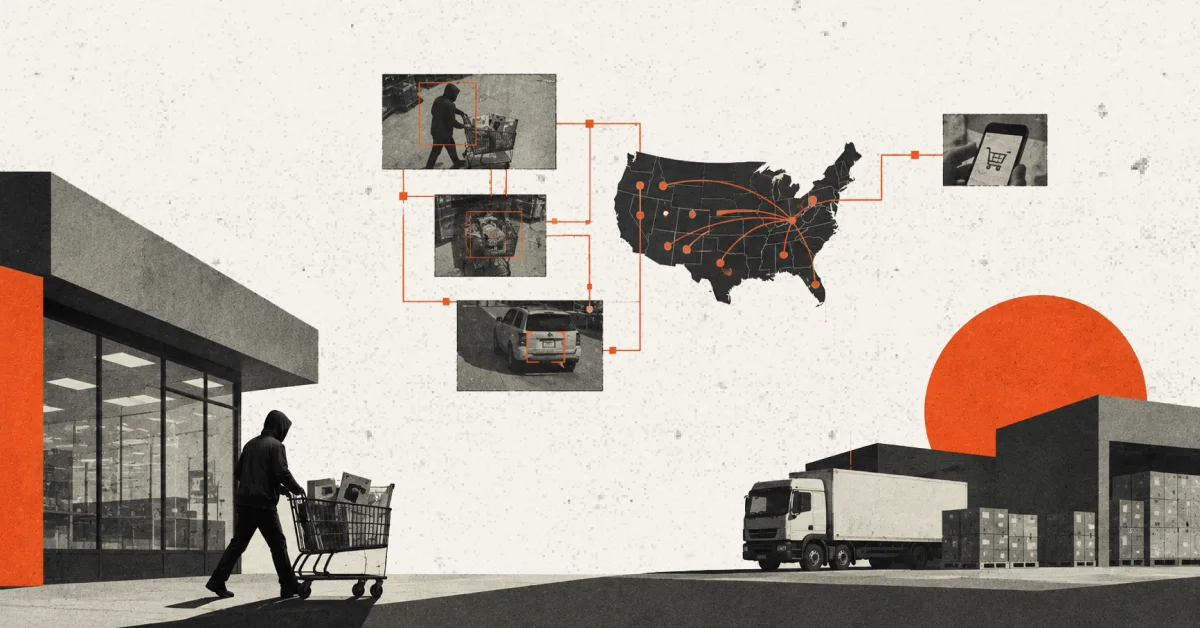
A retail theft can look small when viewed from one store: a few products disappear, a report is filed, and the incident is added to the loss total. But the store may be only the first stop in a much longer chain. The merchandise can pass through several people before it reaches a buyer, and the people organizing that movement may never enter the store where it was taken.
That distinction matters in organized retail crime (ORC). Investigators need to understand not only who took the goods, but also how those goods were collected, processed, transported, and resold. A case from Rhode Island shows how far the activity behind a retail theft can extend beyond the shop floor, and why evidence from separate incidents can become more useful when examined together.
The Part of the Operation That Never Enters the Store
In September 2024, the U.S. Attorney’s Office for the District of Rhode Island announced charges against two men it alleged were senior wholesalers in a retail theft network targeting retailers nationwide. The announcement followed searches at locations in Warwick, Cranston, and Pawtucket, Rhode Island. Investigators reported seizing about 60,000 items, primarily cosmetics and over-the-counter health products, with an estimated retail value of $1.6 million. The goods filled three 24-foot box trucks, according to the U.S. Attorney’s Office.1
The scale is striking, but the more revealing detail is what investigators alleged happened between the store shelf and the eventual sale. The complaint described a chain of roles rather than a single group of shoplifters acting alone. “Boosters” allegedly stole requested products. Crew bosses directed what to take. Other intermediaries, described as “fences” and “cleaners,” allegedly collected merchandise and removed store labels or anti-theft devices. At the wholesale end, “diverters” allegedly moved the goods into secondary markets.1
In this case, prosecutors alleged that the two charged men operated at that wholesale end of the chain. According to the complaint, merchandise passed through businesses allegedly used as fronts and was sold in bulk or through e-commerce marketplaces, including eBay, Walmart, and Amazon. The announcement also described the use of third-party payment processors and bank accounts controlled by the defendants.1
Think about what that means for an investigator reviewing one store incident. The person seen taking a product may be only one participant in the chain. The person arranging the resale may be several steps removed, connected through a vehicle, a shipment, a business, a payment trail, or a repeated pattern in the goods being taken. A store report may accurately describe the theft and still contain only a small piece of the wider picture.
Why the Resale Chain Changes the Investigation
The Rhode Island case also illustrates why following the merchandise can be as important as following the person who took it. The alleged network was not described simply as a series of thefts. Investigators alleged that stolen goods were consolidated, stored, moved, and sold through a distribution structure. Warehouses and business entities were part of the alleged operation, and investigators reported seizing packages that were already in transit.1
That creates a different investigative question. Instead of asking only, “What was stolen from this store?”, teams can also ask: “Where else have these products appeared? Which incidents share people, businesses, shipping details, or other entities? Is there evidence that separate theft reports feed into the same resale channel?” Those questions do not prove that incidents are connected. They help investigators identify relationships worth checking.
The case also depended on coordination beyond a single retailer. The U.S. Attorney’s Office credited the U.S. Postal Inspection Service, Homeland Security Investigations, and the Warwick Police Department with investigative work, and acknowledged loss prevention personnel from several retailers and marketplace and shipping businesses for their assistance.1
The lesson is not that a retailer should have uncovered the entire alleged network alone. It is that information held by different organizations can contribute to understanding how an operation works.
Keep the Evidence Connected After the Store Case Closes
Store-level reporting remains essential. It records what happened, captures evidence, and gives loss prevention teams a way to respond. The gap appears when those records become difficult to compare across stores, regions, or time periods, or when useful context is lost as an individual case is closed.
A stronger investigative process makes it easier to review related incidents together, preserve the context behind people and other entities, and follow a lead from the original theft toward the distribution or resale stage. It should also make uncertainty visible: a shared name, product, vehicle, or account can be a useful lead, but it is not proof by itself that two incidents belong to the same operation.
Hubstream’s loss prevention and theft investigation solution supports this kind of cross-case investigative workflow by helping teams connect incidents and related entities in a shared environment. The value is in making relevant information easier to find and review, while leaving investigators responsible for assessing the evidence and deciding what it means.
Questions Worth Asking
- Can investigators compare related incidents across stores and regions, or does each case largely remain with the team that first recorded it?
- When stolen goods appear in a later shipment, business, or resale channel, can investigators connect that information to the original incidents?
- What context remains available after a store-level case is closed?
- Can teams distinguish a confirmed connection from a lead that still needs to be checked?
The Store Is the Starting Point, Not Always the Whole Case
The Rhode Island investigation offers a useful reminder: retail theft can be one visible step in a much larger alleged supply chain. The store records the loss, but the wider investigation may depend on understanding who collected the goods, where they went, and how they entered the resale market.
No system can infer guilt from a pattern, and the case does not prove that a retailer could have identified the alleged network sooner. It does show why loss prevention investigations benefit from preserving evidence beyond the life of a single store report. The practical goal is straightforward: make it easier to see the relevant pieces together, so investigators can ask better questions and follow the evidence wherever it leads.