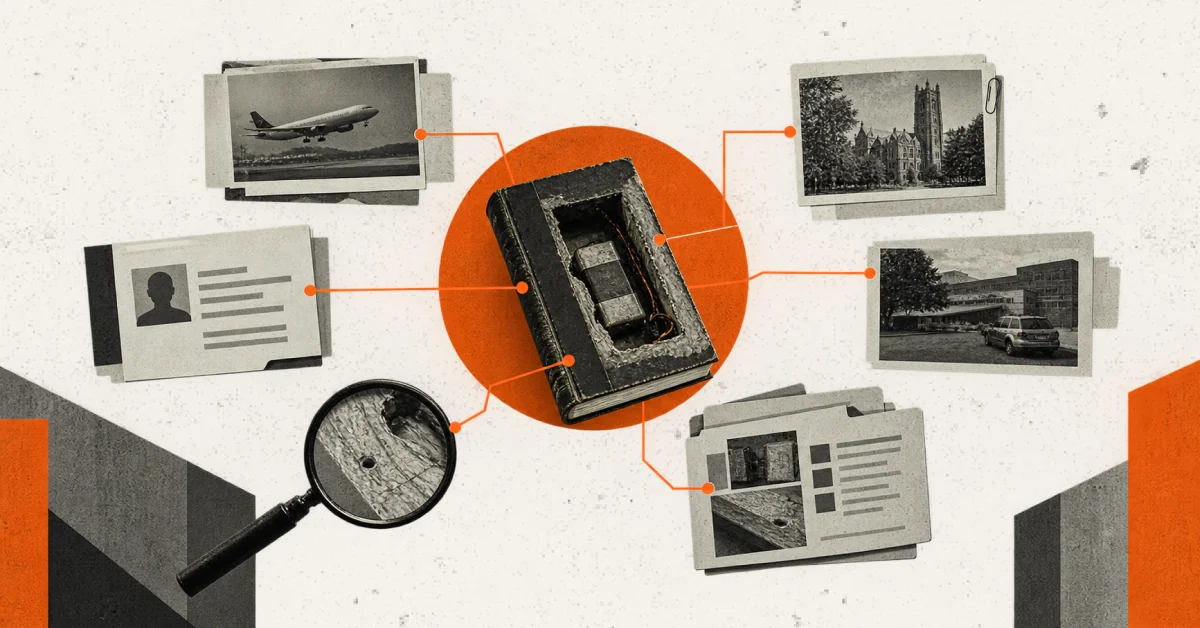
When One Object Connects Unrelated Crime Cases
Sometimes the first connection between two cases is an object, not a person.
A recovered item, a vehicle, or a distinctive component may appear in separate investigations before anyone knows whether the cases are related. When those details are recorded in a system where investigators can search and compare them across cases, they can reveal a connection that deserves a closer look.
But similarity is a starting point. Two objects that look alike are not necessarily the same object, and a shared object does not automatically establish a shared offender.
The opportunity is to make those connections easier to find while keeping the evidence behind them clear.
The Unabomber Investigation: Evidence Without a Name
How do investigators identify someone who deliberately makes the objects he leaves behind difficult to trace?
That challenge shaped the hunt for the Unabomber. Beginning in 1978, Theodore Kaczynski carried out a bombing campaign while concealing his identity. He lived in a remote Montana cabin, used widely available scrap materials to construct his devices, and left misleading clues.
According to the FBI’s account, a task force brought together the FBI, ATF, and U.S. Postal Inspection Service. Investigators examined recovered bomb components and studied the victims’ backgrounds, but those efforts offered limited help in identifying the bomber.
The breakthrough came after publication of his manifesto. Kaczynski’s brother recognized possible similarities and provided letters and other writings. Linguistic analysis, combined with facts from the bombings and Kaczynski’s life, supported a search warrant. Investigators arrested him in 1996.1
The case illustrates an important distinction: examining objects and identifying the person responsible are related tasks, but one does not automatically accomplish the other.
For investigative systems, that distinction points to three practical priorities: make objects discoverable across cases, assess what a similarity actually means, and preserve the evidence behind every connection.
1. Give Objects a History Across Cases
A case file tells the story of an incident. An object may have a history that extends beyond it.
When an item is recorded only in the narrative of one report, finding it again can depend on the right search term or someone remembering an earlier case. Recording its relevant details in a consistent, searchable form gives investigators another way to begin.
Instead of needing a suspect’s name, they can ask: Where else has this object, identifier, or distinctive feature appeared?
Consider a hypothetical example. A vehicle appears in footage from one burglary and in a witness report from another. Making both records searchable gives an investigator a chance to compare them. The original footage and witness account remain essential to deciding whether the connection is meaningful.
The system should make it easy to move from the object to the cases in which it appears, then back to the original evidence. That gives the investigator context as well as a possible match.
2. Separate Similarity From a Confirmed Connection
Finding something similar is useful. Understanding the similarity is the next step.
In the vehicle example, a matching color and model would support a different level of confidence than a clearly recorded, verified identifier. Even evidence that the same vehicle appeared in both cases would leave further questions about who used it and why it was there.
An investigative record should distinguish between:
- Objects that share a description or characteristic.
- Evidence supporting that the same physical object was involved.
- Evidence connecting a person to the object or incident.
Those distinctions help investigators decide what to examine next without turning a preliminary observation into an accepted conclusion.
A possible connection might lead to a review of footage, a closer examination of an item, or a request for specialist analysis. It may be supported by further evidence, remain unresolved, or be ruled out.
All three outcomes belong in the record.
3. Keep Every Connection Tied to Its Evidence
A connection is useful only if investigators can understand what supports it.
They need to know where the information came from, who recorded it, and whether it reflects a witness’s recollection, a documented observation, or an expert examination. They also need access to the relevant report, image, or finding.
This context matters as information moves between teams. A tentative description should not become a confirmed identification simply because it has been copied into several records.
The same principle applies when conclusions change. If further review rules out a suspected connection, that update should be visible to others relying on it. If stronger evidence supports it, the record should show what changed and why.
Preserving that history lets investigators build on earlier work while continuing to question it.
Where Technology Can Help
An investigative system should help teams follow an object across the records they are authorized to access, compare relevant details, and review the evidence supporting a possible relationship.
AI can assist with extracting descriptions and suggesting potential connections for review. Those suggestions need to remain traceable to their sources and subject to investigator validation. A matching description or an AI-generated suggestion is not a forensic finding.
For teams considering Hubstream, the practical question is how it can support this workflow: organizing information around objects and their relationships, bringing relevant records into view, and helping investigators document what they have established.
The value is in making the next investigative step clearer.
Start With the Object. Follow the Evidence.
An investigator may not yet have a name, but they may have an object worth following.
Making that object searchable across cases can open a new line of inquiry. Careful comparison establishes whether the apparent connection holds up. Clear sourcing allows others to understand and review the conclusion.
That is the goal: help investigators find a connection, test it, and decide what the evidence supports.
Federal Bureau of Investigation. “Unabomber.” ↩︎