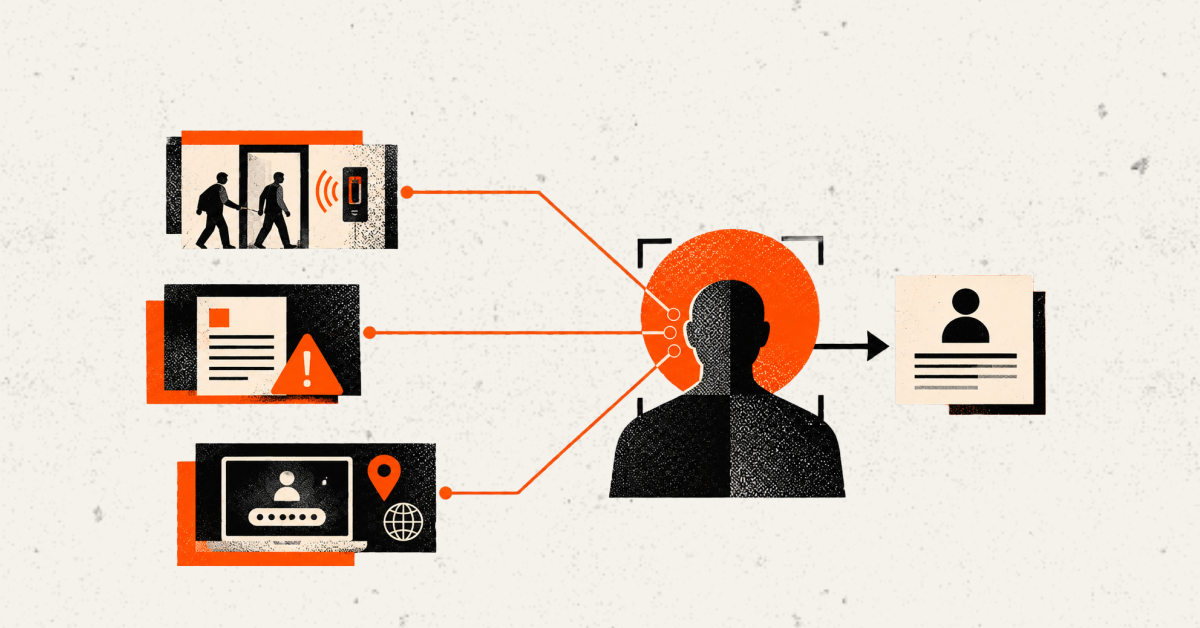
When Separate Minor Security Incidents Point to One Emerging Risk
Security teams score incidents one at a time, and a low-severity disposition may be entirely reasonable. The trouble is that the officer closing the current ticket may have only part of the history. A repeated request for an access exception raises a different question from a first request, even when the officer followed the correct procedure both times. Bringing those entries together gives a supervisor a chance to check what happened and to record an ordinary explanation when the facts support one.
What changes when the supervisor sees the earlier shift
During a morning shift, an employee asks to enter without a badge, saying she left it on her desk. The officer verifies her identity, records her name and follows the site’s entry procedure. Later, a contractor arrives asking for her. That afternoon, the underground garage door stops working. Each report gives the supervisor a different task. Which, if any, belongs in the same review?
In this hypothetical shift, the most useful connection is in the employee’s earlier entry records. It is the third time this week she has requested access without her badge. The shared name makes the contractor’s appointment worth verifying through the normal visitor process. The garage report goes to facilities. Nothing recorded so far connects the door fault to either person.
Three exceptions in a week give the supervisor a specific question. Was the badge missing, malfunctioning or simply left behind each time? The answer could point to an equipment problem, a training issue or a need for closer review. A supervisor can check the dates and notes against the badge record and speak with the employee. A count of repeat events cannot answer that question by itself.
The handoff is where the earlier information earns its place. An incoming supervisor who sees only “access verified” might reasonably assume the matter is complete. One who can open all three entries can check who verified the employee, whether the employee gave the same explanation and whether a replacement badge was already requested. The contractor’s visit raises a separate question about an appointment. A maintenance ticket and a similar timestamp give facilities a starting point for the garage repair, but provide no reason to associate the employee with the fault.
What CISA says about how concerning behavior develops
This distinction matters when discussing insider risk. CISA’s detection guidance says that malicious insider acts often follow a deliberate decision and that most people who experience stress never resort to destructive behavior. Its July 2024 fact sheet describes a possible progression toward a malicious incident and expressly cautions against treating the filing of a formal workplace grievance as an insider-threat indicator. Neither source establishes that repeated badge exceptions predict intent.12
CISA’s fact sheet describes a pathway toward intentional malicious conduct, including preparation and later action. The guidance is useful because an organization may have opportunities to notice and assess concerning behavior before a serious incident. Applying it requires care about what has actually been observed. In the shift example, a supervisor can establish that access was requested three times. Nothing in the reports establishes a grievance, a plan or a progression toward a malicious act.12
There is a practical cost to drawing that inference too early. A supervisor who records “possible insider threat” without explaining the basis leaves the next shift a label it may simply repeat. A note stating who verified the employee and which badge issue remains unresolved gives the next supervisor something they can check. That note is also easier to correct if a later record supplies the explanation.
Who owns the pattern no single team owns
CISA recommends a multidisciplinary threat management team to develop an incident response plan and support consistent handling of concerns. A routine access exception can begin with the supervisor responsible for access control. If that review uncovers a discrepancy that meets the organization’s escalation criteria, the supervisor has something specific to refer: the entries, what was checked, and what remains unexplained.2
A security manager can assign ownership before there is an employee to discuss. Who can review repeated access exceptions? Who can verify an appointment with the sponsoring department? When does a supervisor have enough evidence to refer a concern to a multidisciplinary team? Answering these questions in advance reduces the chance that two shifts each assume the other has followed up, or that routine exceptions receive different treatment depending on who is working.
Correlating weak signals without overreacting
Agree on the reviewer, the records they are authorized to compare, and the threshold for follow-up before matching records across teams. Give the reviewer a way to record an ordinary explanation. If a replacement badge resolves the issue, the next shift should be able to see that outcome. If the explanation leaves an entry unaccounted for, the next shift should be able to see that question, too.
Hubstream’s incident and investigation management workspace supports filtering by person, facility and date, and following connections as a case progresses. Those capabilities let an authorized supervisor review the earlier entries alongside the current report. The supervisor can then decide which facts belong together and record the reason for the decision.3
In the morning-shift example, an authorized supervisor could start with the employee record, narrow the view to access exceptions and compare the notes from the three entries. The dates show how often the request recurred. The officer’s notes show how identity was verified. The supervisor can then document a badge replacement or an outstanding question in a place the next shift can find. That gives the next officer a specific follow-up and keeps the unrelated garage repair with facilities.3
For example, matching on a name may return two employees with similar names. The supervisor can verify the employee identifier in the authorized record before combining the events. Even a confirmed identity match says only that the same person appeared in both records. The sequence of events, the person’s role in each and the explanations already documented determine whether there is a reason to look further. A useful review can end with a correction to the handoff or a repair request rather than a referral.
Practical takeaway
At your next shift handoff, pick one recurring access exception and ask the incoming supervisor to find the previous disposition. Can they tell who verified the employee, what the team learned and whether anyone still owes a follow-up? That is a practical test of whether closing an incident preserves the information the next shift needs.
Once the review criteria and ownership are agreed, use a month of closed events to check how the process works. Choose one overlap that warranted a follow-up and one that had an ordinary explanation, if both are available. Ask whether the next supervisor can tell the difference from the record alone. Where the answer is unclear, identify the missing observation or decision and improve that part of the handoff.