
Why Are Investigators Still Acting as Data Analysts?
Investigators need time to examine evidence, test connections and follow leads. When their tools aren’t working properly, they have to spend time cleaning up data sets and mapping connections before they can get on with the investigation.
Why does so much preparation still fall to the investigator? When information sits in separate systems, someone has to reconcile the records and assemble the relationships. A case management platform may hold the report, a screening service the search results, and a spreadsheet the connections between them.
Analysis is central to investigation. Repeatedly preparing the same information consumes time that investigators could use to interpret it. Modern tools can help with two closely related challenges: finding relationships across sources and recognizing when different records describe the same person or organization.
Connect the dots across cases and systems
A useful lead may depend on information held outside the case an investigator is reviewing. The challenge is to bring those relationships into view without requiring someone to search every system and construct each connection manually.
Consider a hypothetical supplier fraud inquiry. Payment records identify a business receiving funds, corporate records name its directors, and an earlier case contains information about another company associated with one of those directors. Reviewing the sources together gives the investigator a reason to examine that relationship. Working through them separately requires the investigator to discover and record each link.
Connected investigative tools can help organize people, businesses, transactions and cases around their relationships. A network view gives investigators a way to follow those links, examine the supporting records and explore where an inquiry might lead. Hubstream’s link chart, for example, supports relationship discovery across entities, incidents and evidence.1
The practical benefit is a broader view of the available information. Investigators can ask how a business relates to other subjects or cases, rather than repeatedly assembling that background from separate search results.
Data Interoperability remains a challenge in practice. Bringing records together does not automatically make them usable. In a 2026 review, the U.S. Government Accountability Office found missing, invalid or duplicate data in all nine federal eligibility data sources it examined.2 These problems made it harder to compare records across systems. Investigators need tools that help resolve those inconsistencies so they can identify connections reliably.
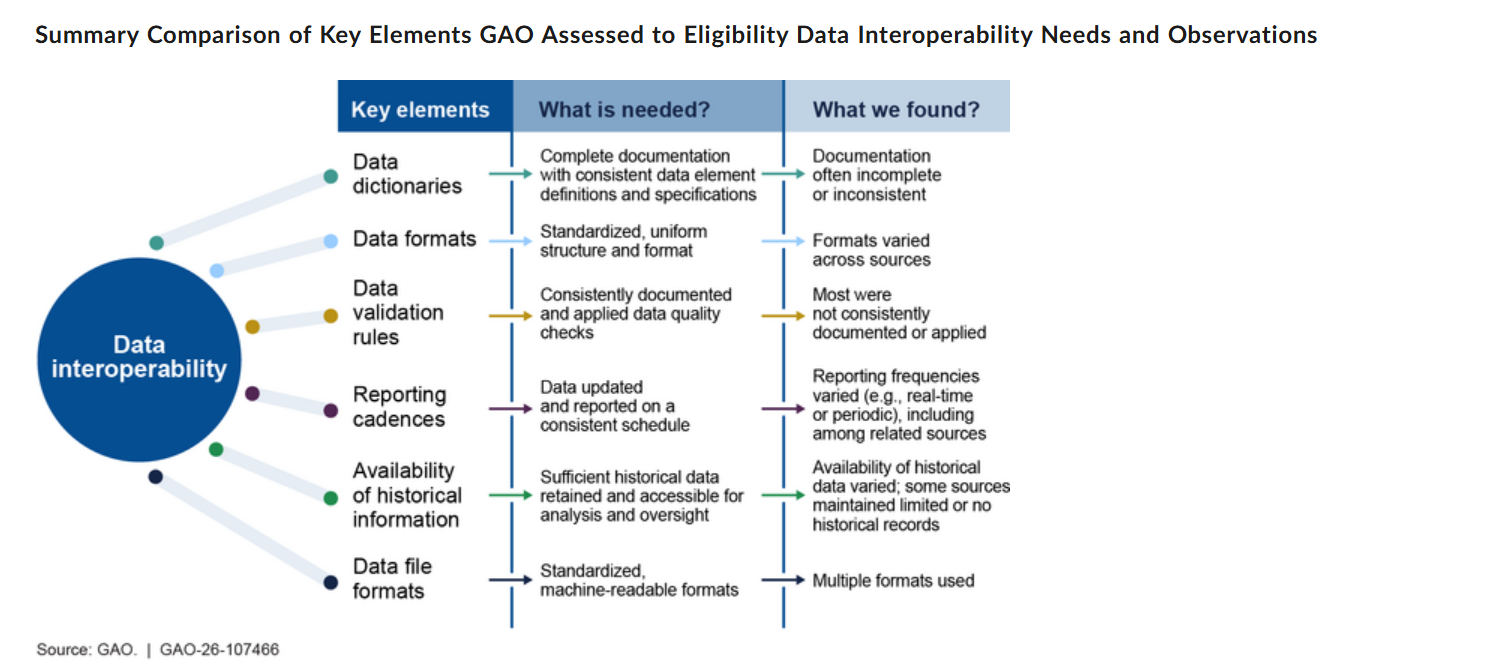
Image credit: U.S. Government Accountability Office, GAO-26-107466
Resolve different records into the right entity
Connecting the dots depends on knowing what each dot represents. The same company may appear under its registered name in one source, a trading name in another, and an abbreviation in a case note. Two unrelated companies may also have similar names.
Entity resolution addresses this problem by identifying different records that refer to the same real-world entity.3 In an investigation, that means assessing whether records describe the same person, business or other subject before building further conclusions around them.
In the supplier example, a matching company registration number could help establish that two differently named records concern the same business. A similar name alone would leave more to examine. An effective workflow brings the relevant identifiers and source details together so the investigator can assess the match.
This gives relationship analysis a more reliable foundation. Once records are associated with the right entity, investigators can examine its activity and connections across sources without treating every variation as a separate subject. They can also keep genuinely different entities separate.
The system should make the basis for a proposed match easy to review and preserve the investigator’s decision. That keeps later work grounded in the evidence behind the connection.
How Hubstream can help
Hubstream’s investigation solution brings these capabilities into an investigative environment designed to work across existing information sources. It supports entity resolution across systems and relationship discovery across people, incidents and evidence, while preserving source context and traceability.1
These capabilities address different parts of the same task. Entity resolution helps establish which records belong to a subject. Relationship discovery helps investigators explore how that subject connects to other entities and cases.
Hubstream’s AI Investigation Assistant can also summarize complex histories and surface relationships and inconsistencies for review.1 That gives investigators support in examining the available information and deciding which questions to pursue next.
When evaluating the workflow, use a representative case. Check whether the relevant records are easier to bring together, whether proposed matches can be examined, and whether the source behind a connection remains accessible. Those are concrete ways to assess its usefulness to the team.
More time for investigative judgment
The value of modern investigative tools lies in how well they help investigators move from scattered records to a focused inquiry. Better connections and clearer identities can reduce repeated preparation and give teams a stronger starting point for examining the evidence.
Before adding another tool, ask what work it will remove from the investigator’s day. The goal is more time to evaluate leads, resolve uncertainty and decide where the investigation should go next.
Hubstream. Product Capabilities. ↩︎ ↩︎ ↩︎
GAO, Federal Data: Congressional Action Needed to Improve Interoperability of Award and Payment Eligibility Data, June 16, 2026. ↩︎
IBM Research. Low-resource deep entity resolution with transfer and active learning. ACL 2019. ↩︎