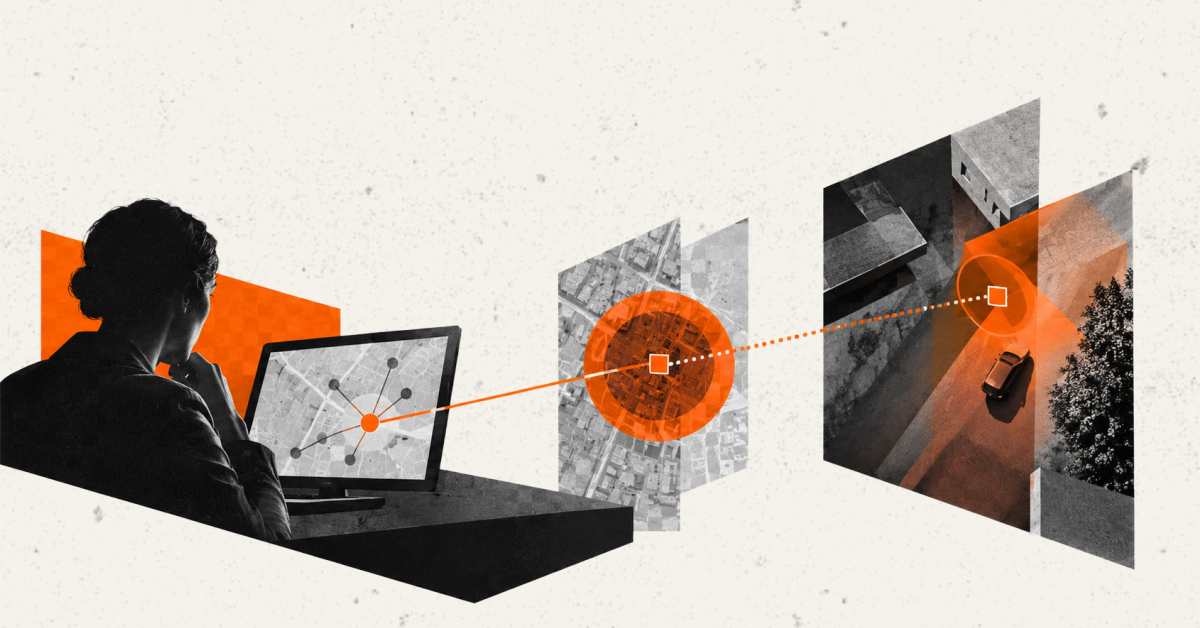
How the First Correlation Initiates the Nearby Investigation
When an analyst finds a connection, such as a suspect linked to a vehicle or a burglary that matches a known method, recording it can feel like the end of the task. The search turned up what the analyst asked for. But a finding can also sharpen the next question. After a residential burglary, for example, the timing and location of the incident can help investigators decide which nearby reports to review next.
Why a found connection leads to a nearby investigation
A search for a vehicle might identify the reports that mention it. A search for a particular method of entry might turn up an earlier burglary. In either case, the result answers the immediate question. When the search ends there, the next step depends on someone returning to the case.
For residential burglary, near-repeat research gives an investigator a reason to come back. If another burglary is reported nearby a few days later, the investigator can compare the two accounts while the details are still fresh.
What near-repeat research shows
The near-repeat pattern is well documented for residential burglary. A 2007 cross-national study led by Shane D. Johnson examined ten areas in five countries. In every area studied, homes within 200 meters of a burgled home faced an elevated risk of burglary for at least two weeks. The precise pattern varied across locations.1
A 2018 study by Eric L. Piza and Jeremy G. Carter examined residential burglary and motor vehicle theft in Indianapolis. Pairs of residential burglaries at different locations within one block and four days of each other occurred 78 percent more often than expected by chance. For pairs of motor vehicle thefts within the same distance and time window, the corresponding figure was about 45 percent.2
Tasha J. Youstin and colleagues examined shootings, robbery, and auto theft in a 2011 study. They found near-repeat patterns across all three crime types, though each had its own pattern in space and time.3
These findings describe an elevated risk across the incidents studied. They cannot predict which home or vehicle will be affected or identify who committed a particular offense. Piza and Carter also note that a short period of elevated risk can limit the time available for prevention.2
If the first link points somewhere, why does the search end there?
Researchers have tested whether promptly notifying nearby residents after a burglary can reduce subsequent burglaries. A 2019 study by Elizabeth Groff and Travis Taniguchi examined that approach in Baltimore County, Maryland, and Redlands, California.4
For an investigator reviewing incoming reports, the practical question is simpler. If another burglary is reported nearby a few days later, the first report gives the investigator something specific to check. Do the witness accounts describe the same vehicle? Do the reported times fit? The answers can strengthen or weaken the possibility of a link.
A correlation that updates the next question
When a residential burglary is logged, investigators should be able to see what else is connected to the people, vehicles, and locations involved. Research and local incident data can help a unit choose a short review window for that crime type. As reports arrive, an investigator can compare their details with the original account and decide which leads warrant follow-up.
Hubstream’s crime investigation solution supports this work by keeping people, vehicles, locations, and incidents linked across cases. When an investigator finds a connection, they can examine the related records and return to them as new reports arrive. The investigator decides whether the evidence supports further action.
Practical takeaway
For the crime types your unit handles most, write down what the research and your own incident data suggest about two questions. How close together do incidents tend to occur, and over what period? For residential burglary, use that local review window to assign a simple follow-up when a burglary is reported. Have someone compare new reports from nearby locations with the original account and record which details support or weaken a possible link.
Shane D. Johnson, Wim Bernasco, Kate J. Bowers, Henk Elffers, Jerry Ratcliffe, George Rengert, and Michael Townsley, “Space–Time Patterns of Risk: A Cross National Assessment of Residential Burglary Victimization,” Journal of Quantitative Criminology 23(3), 201–219, 2007. ↩︎
Eric L. Piza and Jeremy G. Carter, “Predicting Initiator and Near Repeat Events in Spatiotemporal Crime Patterns: An Analysis of Residential Burglary and Motor Vehicle Theft,” Justice Quarterly 35(5), 842–870, 2018. See Tables 2 and 3 for the Indianapolis percentages. ↩︎ ↩︎
Tasha J. Youstin, Matt R. Nobles, Jeffrey T. Ward, and Carrie L. Cook, “Assessing the Generalizability of the Near Repeat Phenomenon,” Criminal Justice and Behavior 38(10), 1042–1063, 2011. ↩︎
Elizabeth Groff and Travis Taniguchi, “Using Citizen Notification to Interrupt Near-Repeat Residential Burglary Patterns: The Micro-Level Near-Repeat Experiment,” Journal of Experimental Criminology 15(2), 115–149, 2019. ↩︎