A Customs Seizure Is Not an Endpoint: How Patterns Across Shipments Can Open a Wider Counterfeit Investigation
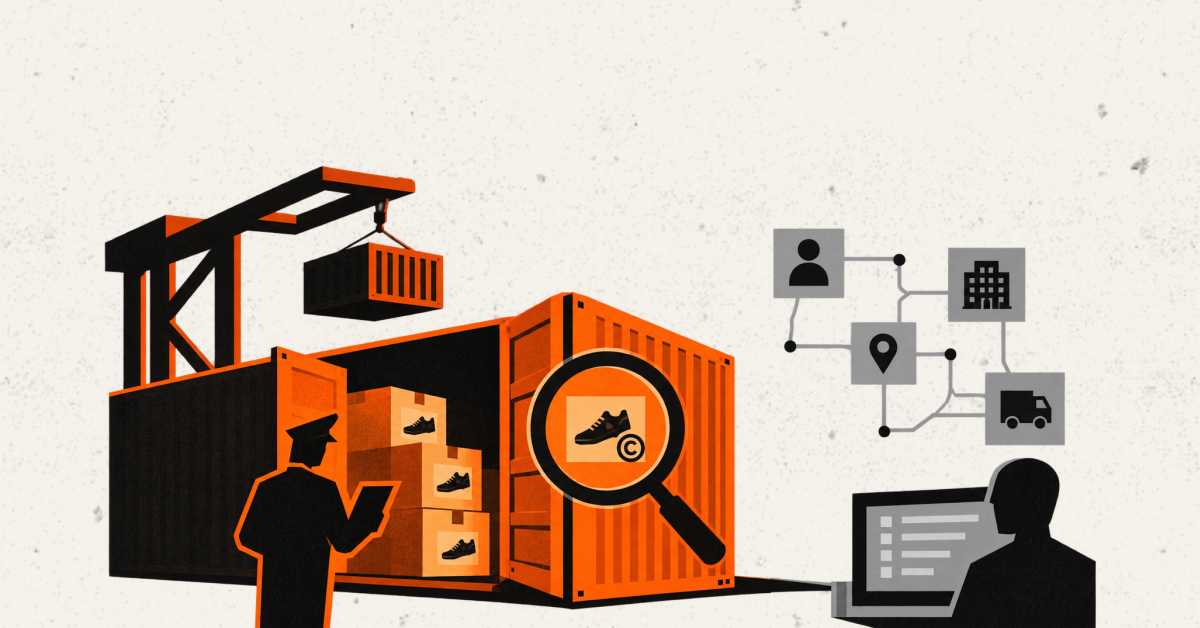
When customs officers seize a shipment of counterfeit goods, the seizure records a clear outcome: the goods were stopped. That is a legitimate result. But a seizure can also carry information about who sent the goods, where they were going, and how they were routed, and that information can give a brand protection team a lead on the people behind the trade. The two cases described here share one feature: someone treated the seizure as the first entry in a longer record, not the last.
This article looks at what seizure totals tell us, what two documented U.S. Customs and Border Protection cases show about looking across seizures, and what a more useful standard looks like for rights holders.
Why a seizure gets recorded as an outcome
The scale of border enforcement is real. In fiscal year 2023, CBP seized 19,724 shipments containing goods that violated intellectual property rights. CBP reported nearly 23 million counterfeit items in those shipments, with a manufacturer’s suggested retail price of over $2.7 billion had they been genuine.1
Within these counterfeit shipments, an operator who spreads shipments across many importer names and addresses looks like many small, unrelated cases to a process that examines one entry at a time. However, in reality, the data that could link one seizure to another can appear in shipment records: consignee and shipper names, addresses, declared contents, quantities, routing, and broker details. Details recorded for an individual seizure can also be compared across seizures.
What happened when someone looked across the seizures
CBP’s own account of two film piracy cases, published in its Frontline magazine, shows what changes when seizures are read together.2
In the summer of 2012, a CBP international trade specialist on the West Coast, identified in the article by the pseudonym Theo Fletcher, was reviewing seizure data and saw a high concentration of pirated DVD seizures in a small city in the Pacific Northwest. He then noticed similar patterns in other cities in a neighboring state. He brought in Homeland Security Investigations, and within months, using several databases, they confirmed that one of the importers had set up nearly 20 companies using multiple names and identities. Investigators executed federal search warrants at several locations. The case was still pending when CBP published its account.
The second case began in 2011 at a DHL facility in Cincinnati. CBP officers noticed that hundreds of shipments were going to one recipient in Bartlett, Illinois. An officer found that he had received about 800 shipments over the previous five years. The packages the officer examined were labeled “teaching supplies” or “bread boards.” CBP made 25 seizures over a six-week period in August and September 2011, and an HSI special agent then contacted the Bartlett Police Department. A detective saw that the recipient’s garage was full of boxes, but as he told CBP, that alone was not enough for a search warrant. Investigators built the case further, and after a controlled delivery in July 2012, police searched the home. CBP reports that more than 100,000 counterfeit DVDs were found, making it one of the largest counterfeit DVD seizures in the Midwest. The recipient told investigators he had sold more than $660,000 of counterfeit films in a 10-month period. According to CBP, he later pleaded guilty to a state charge of unlawful use of recorded sounds and images.2
What made the difference was a person who asked what the seizures had in common, and the investigative work that followed.
If every seizure is closed on its own, who is counting the senders?
This raises a fair question for any program that reports seizures as its main output. If thousands of shipments are stopped in a year and each is closed as a separate event, how many distinct operators were behind them, and how would anyone know?
In the Pacific Northwest case, a film studio received seizure notices about pirated copies of its films. Its trade association was beginning its own investigation and asked Fletcher for help.2 For rights holders, test purchases, marketplace listings, and supplier records may offer further leads on an operator named in a customs seizure notice.
Treating each interception as the first entry in a longer record
A more useful standard treats each seizure notice as structured information about senders, not just a record about a shipment. That means capturing the available names, addresses, and product details, along with any broker or routing information from shipment records in a form that can be compared with earlier seizures and with the rights holder’s own marketplace and supply chain findings. When a new notice arrives, an investigator should be able to see quickly whether any of those details have appeared before.
Practical takeaway
Pick the last 12 months of customs seizure notices your organization received and put the available importer and exporter names and addresses into one list. Look for repeats and near-repeats, then compare them with the sellers and suppliers in your marketplace enforcement records. Check whether a second detail supports a link between seizures. The comparison can also show which details to record consistently for the next review.
Hubstream’s IP and brand protection solution is built to help your team with these tasks. A shared address, for example, may connect two shipments filed under different importer names. Investigators can then review the underlying records to determine whether the names point to the same operator and whether the evidence supports a referral or legal action.
U.S. Customs and Border Protection, “FY 2023 Fact Sheet: Intellectual Property Rights,” CBP Publication No. 3651-0324. ↩︎
Marcy Mason, “Fighting Film Thieves,” U.S. Customs and Border Protection, Frontline, September 2014. ↩︎ ↩︎ ↩︎