How Connected Suspicious Activity Reports Can Change an Investigation
A suspicious activity report (SAR) records activity that a financial institution has reason to question. Some reports describe a series of transactions. Others may become more informative when investigators compare the accounts, people or counterparties mentioned in other records. The practical question is what an authorized analyst can add to the picture by following one of those identifiers. Does the same account receive funds from several sources? Where does the money go next, and which record documents the transfer?
What one filing represents
Financial institutions filed approximately 4.7 million suspicious activity reports in fiscal year 2024, up from 4.6 million in fiscal year 2023. A SAR can describe a series of transactions, and eligible institutions may file jointly. The filing count therefore measures reports received. It cannot tell an investigator how many distinct schemes the filings describe or how much evidence any one report contains.12
An analyst might spend considerable time on one filing because its narrative already contains several transactions that deserve scrutiny. A second filing might add only one detail, such as the identity of a recipient. That detail could change which records are worth requesting. A process that records the disposition of each report without recording the account or counterparty examined makes the relationship harder for another analyst to discover.
What a documented case shows
In December 2002, a New York task force identified numerous suspicious activity reports describing transactions involving a company in the area. The company was a South American money exchange business with several New York bank accounts. Read together, the filings gave agents a pattern to investigate. FinCEN’s published account provides an unusually direct answer to a question financial investigators face when reviewing a lead. What else in the record concerns the same people or accounts?3
According to the case summary, agents identified five alleged co-conspirators and traced $500,000 in third-party and payroll checks through two personal accounts belonging to the principal target. The funds were subsequently wired elsewhere in the United States. Agents arrested the target in fall 2003 in connection with alleged money laundering and operation of an unlicensed money services business. FinCEN published the example in August 2004 and reported no final court disposition.3
The amount is a finding from the investigation and the filings together. The summary gives no amount for an individual deposit and no account of what each filer knew. What investigators could see across the records was the movement of funds through particular accounts and onward to other recipients. That sequence gave them a more specific question than a shared name alone could supply.
FinCEN credits the Bureau of Immigration and Customs Enforcement and reports that agents identified companies and individuals using the Black Market Peso Exchange to launder proceeds from alien smuggling. The case summary names two statutes in connection with the arrest, 18 U.S.C. § 1960 and § 1956. It dates the task force’s identification of the SARs to December 2002 and describes the five alleged co-conspirators as people agents identified during the inquiry.3
An analyst reconstructing the case from that public account could draw the two personal accounts and the subsequent movement of funds. They could also record which part of the account came from investigators’ later findings. Assigning an amount or a particular role to every alleged participant would require more evidence than the summary provides. Leaving a detail open is valuable if it tells the next reader exactly what still needs to be established.
When the pattern extends across institutions
The task force case concerns law enforcement reviewing SARs. A financial institution trying to understand activity that extends beyond its own records operates under different information-sharing rules. FinCEN’s June 2026 fact sheet explains that participation under Section 314(b) is voluntary. Eligible institutions that satisfy the requirements can share qualifying underlying information for specified purposes under a safe harbor. Section 314(b) does not authorize sharing a SAR or disclosing its existence.2
FinCEN gives examples of information participants may share, including a newly added payee followed by large transfers, common identifying information across accounts and logins from geographically distant locations. Those details suggest concrete questions. Who received the money? Which accounts shared the identifier? Do the dates support the proposed sequence? Sharing an indicator and establishing what it means are separate steps.2
This distinction affects what a reader can take from the 2004 case. Agents with access to SARs reviewed numerous filings. An institution considering a Section 314(b) request must work within the conditions and confidentiality requirements that apply to its own participation. The case shows why related information can matter to law enforcement. The fact sheet explains what participating institutions can do when they encounter potentially related activity.32
Are you clearing reports or building a picture
This raises an uncomfortable question for any financial intelligence or investigative unit. Does its operating model reward throughput on individual reports, or the assembly of connected pictures? Reviewing and closing reports is measurable and feels productive. It can also fill an analyst’s day without producing the output that matters most: the recognition that several signals belong to the same structure.
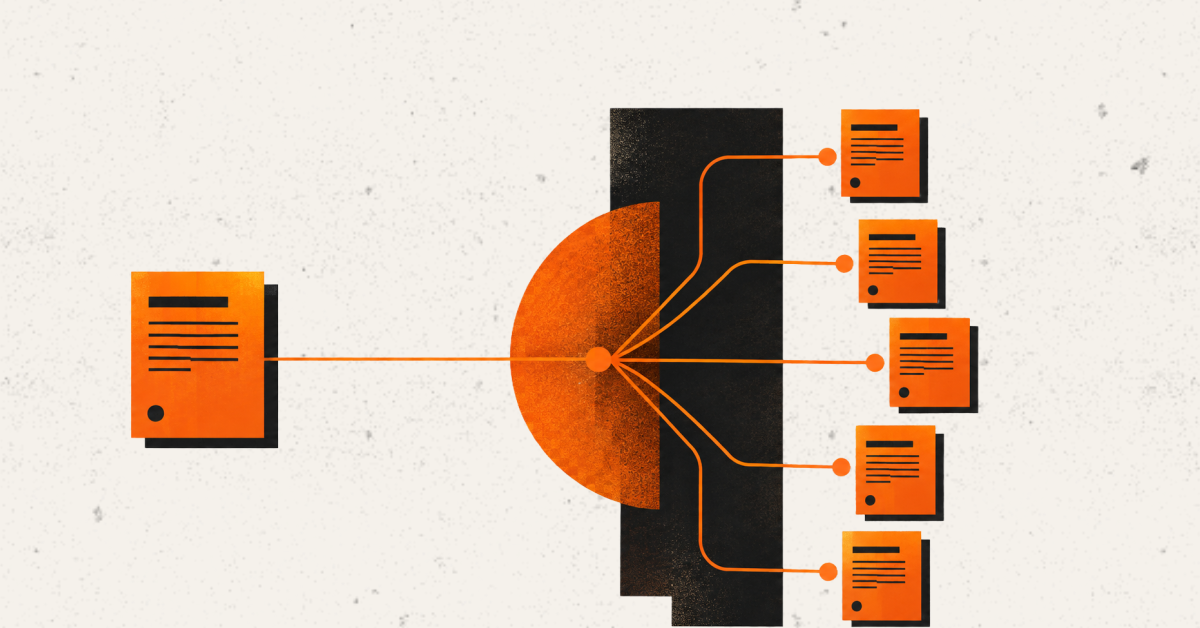
A stronger model treats each report as a point in a larger network rather than an item in a queue. For every incoming signal, it asks which existing people, accounts, and prior reports it touches, and it makes those links visible so the analyst can judge whether they describe a scheme or a coincidence.
An investigator reviewing records they are authorized to access can preserve more than the report’s disposition. Record the account or counterparty checked, the direction and dates of relevant transfers, and which source supports the connection. If two accounts share an address, record that observation precisely. Common control remains a separate question.
Consider two records with the same counterparty name. One may identify an account holder. The other may only mention that name in a payment description. An analyst can record the shared text while keeping the identity question open. Account identifiers, dates, transaction amounts and the source of each observation give a reviewer a basis for deciding whether the proposed link survives closer examination.
Practical takeaway
Hubstream’s crime investigation solution lets investigators explore relationships across records and cases.4 Consider how a team might apply that capability to a financial investigation. If an account has been recorded and linked in two authorized case files, an investigator could compare the transactions documented in each. The earlier case may record a transfer in the opposite direction or show that the name belongs to another person. That context gives the investigator a basis for keeping, qualifying or dismissing the proposed link. At the next review of closed leads, choose one and ask a colleague to trace the money from the available records. Where the trail ends, can they tell whether the team ruled out the connection or simply ran out of evidence? That distinction matters when the next report arrives.
Pick ten recent financial leads your team closed individually. For each, look for the identifiers the analyst checked, the records returned, and the reason they judged a possible connection relevant or incidental. If the checks occurred but the record contains only the decision to close, ask what another analyst would have to reconstruct when the same counterparty appears again.