
Online Brand Protection Guide

Table of contents

What is online brand protection? 

Types of Online Brand Infringement 

Online Brand Protection Strategy 

How can modern case management software help you? 

How to assess case management software? 

How can Hubstream help you? 

What is online brand protection? 

Online brand protection is the act of prevention against online brand infringement. By engaging in brand protection, you are seeking to prevent someone from infringing your brand illegally by using your intellectual property and/or brand name digitally. 

Types of Online Brand Infringement 

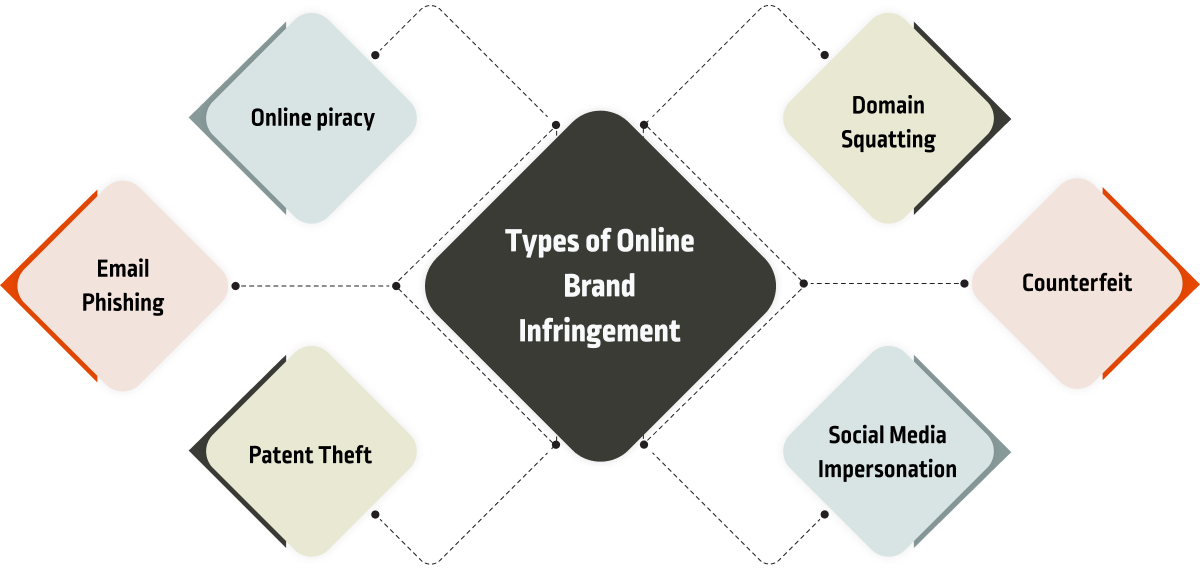
As the digital landscape continues to expand, brand owners face numerous challenges in protecting their trademarks, copyrights, and other valuable assets from exploitation and misuse. Here are some common types of online brand infringements: 
Layer Image

Online Counterfeit:

Online counterfeit refers to the unauthorized production and sale of counterfeit products bearing the trademarks or logos of a legitimate brand. This infringement occurs when individuals or entities replicate and distribute fake versions of genuine products through various online channels, often deceiving consumers into believing that they are purchasing authentic goods.

Online Piracy:

Online piracy involves the unauthorized reproduction, distribution, or sharing of copyrighted digital content, such as movies, music, software, and books, without the permission of the copyright holder. This infringement typically occurs through file-sharing websites, torrent platforms, streaming services, or unauthorized digital marketplaces, undermining the rights and revenues of content creators and rights holders. 

Patent Theft:

Patent theft occurs when someone illegally obtains and uses another company’s patented technology or invention without permission. In the online realm, patent theft can involve the unauthorized replication or commercialization of patented products or processes, infringing on the exclusive rights granted to the patent holder.

Domain Squatting:

Domain squatting, also known as cybersquatting, involves the registration or use of domain names that are intentionally similar or identical to established brand names, trademarks, or popular websites. Squatters aim to profit by either selling the domain to the legitimate brand owner at an inflated price or by leveraging the domain’s traffic for advertising or other illegitimate purposes.

Email Phishing:

Email phishing refers to the fraudulent practice of sending deceptive emails that appear to be from a reputable source, such as a well-known brand or financial institution, with the intent to trick recipients into revealing sensitive information, such as passwords, credit card numbers, or personal details. Phishing emails often contain malicious links or attachments that can lead to identity theft, financial fraud, or unauthorized access to personal or corporate data.

Social Media Impersonation:

Social media impersonation is a practice where a cybercriminal creates a profile on a social media platform by stealing and using identifiable information, including individual name, company name, image, location, and background details. 

Online Brand Protection Strategy
Layer Image

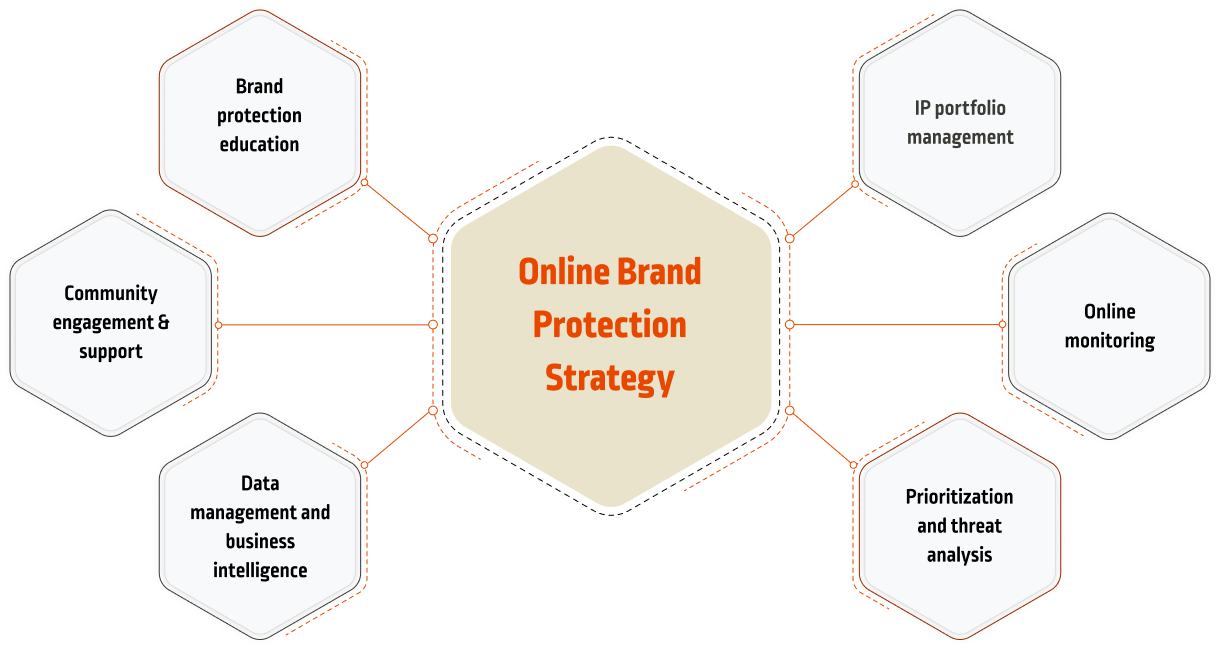
An effective online brand protection strategy incorporates several elements as outlined below:

IP portfolio management

IP portfolio management is a crucial brand protection strategy that focuses on the strategic management and maintenance of a company’s intellectual property assets. With the increasing importance of online presence, protecting a brand’s intellectual property rights on the internet has become essential. 

Online monitoring

Online monitoring is employed by companies to proactively identify and address instances of brand infringements on the internet. It involves the systematic tracking, analysis, and surveillance of online platforms, websites, social media networks, and other digital channels to detect unauthorized use of a brand’s intellectual property and reputation. 

Prioritization and threat analysis

Prioritization and threat analysis are essential components of an effective online brand protection strategy. By assessing and analyzing potential threats, brand owners can allocate their resources strategically and focus on addressing the most significant risks to their brand’s reputation and intellectual property.

Data management and business intelligence

Effective data management is essential for brand protection as it allows organizations to collect, organize, and secure valuable information related to their brand and online presence. This includes customer data, product information, transaction records, online reviews, social media interactions, and more. On the other hand, business intelligence refers to the process of gathering, analyzing, and interpreting data to make informed business decisions. Leveraging BI tools and techniques can significantly contribute to brand protection efforts.

Brand protection education

Brand protection education is essential to safeguard intellectual property rights and mitigate online brand infringements effectively. By providing education and training to employees, partners, and customers, brand owners can raise awareness about the importance of protecting the brand and equip stakeholders with the knowledge and tools to identify and address potential threats.

Community engagement & support

Community engagement and support can be an effective online brand protection strategy. By actively engaging with your community and providing support, you can build a strong brand reputation, foster loyalty among customers, and mitigate potential infringements.


How can modern case management software help you?

img

Getting You Organized and Out of Data Madness

A modern brand protection case management platform provides a centralized hub to organize and manage your online brand protection efforts. It eliminates data chaos by providing a structured system to store, track, and analyze information related to online brand infringements, investigations, and enforcement actions. With streamlined data management, you can efficiently handle the complexities of investigation processes and stay on top of potential threats.

Managing a Massive Influx of Investigation Data Online

Tasks for online brand protection frequently involves gathering and scrutinizing vast amounts of investigation data from diverse sources. A robust case management platform enables you to handle this kind of of data influx effectively. It provides tools for data aggregation, categorization, and advanced search capabilities, making it easier to identify patterns, detect trends, and gain valuable insights to strengthen your brand protection strategy.

img
img

Presenting a Holistic View for Your Team

Modern case management software offers a comprehensive view of your brand protection activities. It consolidates data from multiple channels, such as online marketplaces, social media platforms, and domain registration, into a single dashboard. This holistic view allows your team to assess the overall brand health, identify areas of concern, and prioritize their efforts for maximum impact. 

Eliminating Repetitive and Annoying Tasks

Manual and repetitive tasks can consume valuable time and resources that could be better utilized for strategic brand protection activities. Modern case management software automates repetitive tasks, such as routine data imports, report generation, and task reminders. By automating these tasks, your team can focus on critical aspects of brand protection, such as investigating infringements, collaborating with stakeholders, and implementing proactive measures to safeguard your brand.

img
img

Learn from the Best Investigation Teams

Reliable brand protection case management software is designed based on the expertise and experience of top investigation teams. It incorporates industry best practices and methodologies to help you navigate the complexities of brand protection effectively. By leveraging the insights and knowledge from of these experienced professionals, you can enhance the efficiency and effectiveness of your brand protection efforts. 

How to assess case management software?

Selecting the right brand protection case management software is crucial to ensure its compatibility with your organization’s unique requirements. To assess and compare various software solutions effectively, consider the following key factors:

Workflow and Automation

Evaluate a platform's ability to streamline brand protection workflows by automating routine tasks, creating standardized processes, and integrating with other systems for seamless information flow.

Visualization

Assess the software's data visualization capabilities, including customizable dashboards, charts, and graphs, to gain insights from brand protection data at a glance.

Artificial Intelligence (AI)

Consider whether the software incorporates AI technologies, such as machine learning and natural language processing, to enhance detection, analysis, and decision-making processes in brand protection.

Flexibility / Customization

Determine if the software allows customization to align with your specific brand protection requirements, such as configuring workflows, data fields, and user permissions to adapt to your organization's unique needs.

Collaboration

Examine the software's collaboration features, such as real-time messaging, task assignments, and document sharing, to facilitate seamless teamwork and communication among brand protection stakeholders. 

Data Hub

Ensure the software serves as a centralized data hub, enabling you to aggregate, organize, and manage brand protection data from various sources in a structured and accessible manner.

Compliance

Verify if the software includes features to support compliance with relevant laws and regulations, ensuring your brand protection activities adhere to legal requirements and industry standards. 

Templates

Check if the software offers pre-built templates for common brand protection processes, such as case templates, investigation forms, and reporting formats, to expedite workflow setup and standardization. 

Advanced Business Intelligence

Consider whether the software provides advanced analytics capabilities, such as data mining, trend analysis, and predictive modeling, to derive actionable insights and optimize brand protection strategies.

Outcome-Based Management (ROI focus)

Evaluate if the software offers outcome-based management features, including key performance indicators (KPIs), metrics, and reporting tools, to measure the effectiveness and return on investment (ROI) of your brand protection efforts. This allows you to assess the impact of your activities, make data-driven decisions, and allocate resources more efficiently.

When assessing and comparing brand protection case management software, consider these factors to ensure that you choose a solution that aligns with your brand protection goals, streamlines processes and maximizes the effectiveness of your brand protection efforts.

How can Hubstream help you?

It can seem overwhelming to find the right fit of a case management system for your organization and evaluate the various features provided. Fortunately, Hubstream has a team of experts that can help. Hubstream is purpose-designed to provide a comprehensive case management solution for investigative teams. We have successfully transformed how investigative teams use data for their operations and helped them reap quick benefits and provide better protection. Our team has a global customer base for both private and public sectors, ranging from retail, consumer electronics, e-commerce, pharmaceutical, law enforcement, and government agencies.

Interested in learning more?